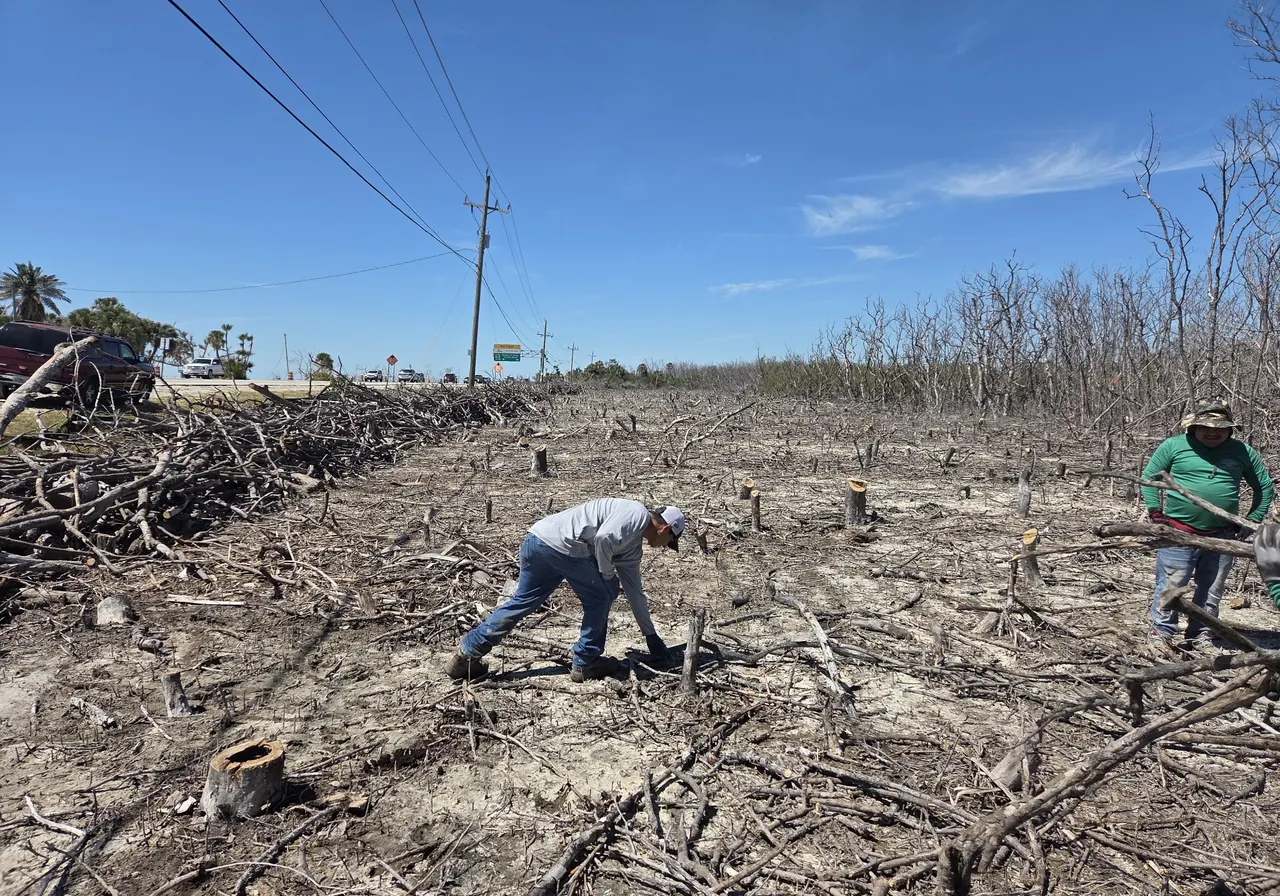
Storm Damage & Emergency Tree Service in Southwest Florida
24/7 emergency response when trees come down
Davie Tree Service provides 24/7 emergency and storm damage tree service throughout Southwest Florida. When a tree falls on your home, lands on a vehicle, blocks your driveway, or leans dangerously after a hurricane, our crews respond to stabilize and safely remove it. We are licensed and insured, carry $1 million in liability coverage, have served the region since 1984, and can document the damage for your insurance claim.
What's Included
Storm work happens fast and under pressure, so every emergency call from Davie Tree Service is built around safety first, then rapid removal, then full cleanup. Here is what is included when you call us after a tree comes down in Southwest Florida.
Emergency and fallen tree removal
Safe removal of trees that have fallen on homes, vehicles, fences, pool cages, and across driveways. We work day or night, prioritizing hazards to people and structures. Available 24/7 across Lee and Collier counties.
Hazardous leaner and uprooted tree takedowns
Removal of split trunks, cracked limbs, and trees uprooted or leaning after soil saturation. Saturated Southwest Florida ground fails root plates even in moderate wind, so a standing tree can still be an emergency. We assess and take it down in controlled sections.
Emergency tarping and stabilization support
After the tree is off your roof, our crews and vetted local partners can tarp the opening and stabilize the site to limit further water intrusion until permanent repairs happen. This protects the interior of your home while you arrange contractors.
Insurance documentation and debris cleanup
We provide photos and a written description of the damage and work performed to support your storm-damage claim. Every job ends with limbs, logs, and hurricane debris chipped and hauled away, leaving your property as safe and tidy as conditions allow.
What to do right now if a tree just fell
If a tree just fell on your home, vehicle, or yard, get everyone clear of the area first, then never touch anything contacting a power line, then document the scene with photos before anything is moved, then contact your insurer, then call a licensed and insured crew for removal. Follow these five steps in order. They protect lives first and your claim second.
Stay calm and do not attempt to move a large tree, cut tangled limbs, or climb onto a damaged roof yourself. Storm-loaded trees hold enormous stored energy and can shift or snap without warning. Davie Tree Service is available 24/7 across Southwest Florida to handle the removal safely.
- Get everyone clear. Move people and pets away from the tree, damaged structures, and any sagging limbs. Do not go back inside a room the tree has pierced until it is stabilized.
- Never approach anything touching a power line. Treat every downed line as live. Do not touch the tree, the fence, the puddle, or the vehicle it contacts. Call your electric utility (LCEC, FPL, or your provider) and 911 if there is arcing or fire.
- Document everything with photos before anything is moved. Photograph the tree, the damage, the whole scene, and close-ups. Insurers want to see the condition before cleanup, so capture it first.
- Contact your insurer. Report the claim promptly and ask what your policy requires. Keep receipts for any emergency mitigation such as tarping.
- Call for professional removal. Reach Davie Tree Service at 239-693-5042 for insured, 24/7 storm response. We stabilize the hazard, remove the tree in controlled pieces, and provide documentation for your claim.
Types of storm and emergency tree situations we handle
Davie Tree Service handles every storm and emergency tree scenario common in Southwest Florida: trees on houses, trees on vehicles, trees blocking access, trees on fences and pool cages, uprooted trees, hazardous leaners, hanging limbs, split trunks, trees near power lines, and large-scale post-hurricane debris. Each situation demands different rigging, equipment, and sequencing, and our crews match the approach to the hazard.
Tree on a house or roof
A tree on your house or roof is an emergency that requires controlled, piece-by-piece removal to avoid driving the trunk further through the structure. Our crews rig and lower sections away from the opening rather than pulling weight across your roof. We can tarp the damaged area afterward to limit water intrusion.
Tree on a vehicle
A tree on a vehicle is removed by lifting or cutting weight off in stages so the car is not crushed further during the process. We photograph the vehicle and tree for your claim before we begin. Auto and homeowners coverage often interact on these losses, so documentation matters.
Tree across a driveway or blocking access
A tree blocking your driveway or road access is one of the fastest jobs to clear, and we prioritize it so emergency vehicles and residents can get through. We cut and haul the sections that block the path first, then handle the rest of the tree. Clearing access is often the most urgent call after a storm.
Tree on a fence, pool cage, or lanai
A tree on a fence, pool cage, or screened lanai is removed with careful rigging to avoid tearing more aluminum or screen than the storm already did. Pool cages and lanais are common in Cape Coral and Naples and are expensive to replace, so we lift and lower sections rather than dragging them across the enclosure.
Uprooted trees and hazardous leaners
An uprooted tree or a tree leaning after soil saturation is a live hazard that can fall the rest of the way at any time. Saturated Southwest Florida sand loses its grip on the root plate, so a tree can lean or lift even in moderate wind. We stabilize, then remove, then can grind the exposed root plate and stump.
Hanging and broken limbs, and split trunks
Hanging limbs, called hangers, and split trunks are removed before they drop on people, vehicles, or the roof below. A hanger lodged in the canopy is under tension and unpredictable. Our climbers and bucket trucks remove the broken material and make clean cuts so the wound can seal rather than tear further.
Trees on or near power lines and post-hurricane debris
A tree on or near a power line is handled by first calling the utility, because energized lines are the utility's responsibility and must be de-energized before tree work is safe. For large post-hurricane debris volume, our crews and vetted local partners chip, load, and haul the piles from your property so cleanup is complete, not just cleared to the curb.
Hurricane season and why Southwest Florida trees fail
Hurricane season in Southwest Florida runs June 1 to November 30, and the greatest tree risk comes from saturated soil rather than wind alone. When rain soaks the region's sandy soil, the root plate loses its anchor, and even a healthy tree can uproot in moderate wind. Preparing before a named storm, understanding species behavior, and knowing what the first 48 hours look like all reduce your risk.
Before a storm arrives, secure loose yard items, and if a named storm is days out it is too late for major trimming, so the real preparation happens well before the season. The best defense is pre-season structural thinning that lets wind pass through the canopy instead of pushing against a dense sail.
In the first 48 hours after landfall, roads are often blocked, power is down across neighborhoods, and demand for tree crews spikes region-wide. Access to some areas is limited, so professional crews work through the most dangerous calls first: trees on homes, trees on people's only exit, and anything tangled with lines.
Laurel oak versus live oak in a storm
Laurel oak fails far more often than live oak in Southwest Florida storms because it is a faster-growing, weaker-wooded, shorter-lived tree prone to internal decay and limb drop. Live oak is dense, wind-firm, and long-lived, and it holds up much better when properly pruned. Older laurel oaks in the region are frequent storm casualties and worth an honest hazard assessment before the season.
Palm survival versus hardwood failure
Palms usually survive storms that topple hardwoods because their flexible trunks and fibrous root systems bend and hold rather than snap. Sabal (cabbage) palms, our state tree, are especially wind-resistant, while queen palms and top-heavy coconut palms can lose crowns or fronds. Hardwoods like laurel oak, slash pine, and mature ficus carry rigid, heavy canopies that catch wind and fail when the soil gives way.
- Season dates: the Atlantic hurricane season is June 1 to November 30, with peak activity typically August through October.
- Pre-season preparation: schedule structural thinning and deadwood removal well before June so wind can pass through the canopy.
- Before a named storm: secure loose items and identify hazardous leaners early, since last-minute major trimming is not safe or effective.
- First 48 hours after landfall: expect blocked roads, downed lines, widespread outages, and heavy region-wide demand for insured crews.
Our Process
- 1
Call us anytime, 24/7
Reach Davie Tree Service at 239-693-5042 day or night for any storm or emergency tree situation across Southwest Florida. Tell us what happened, whether anyone is in danger, and whether a power line is involved. If a line is contacting the tree, we will direct you to call the utility first, because energized lines must be de-energized before tree work is safe.
- 2
Rapid, safe assessment and stabilization
We prioritize hazards to people and structures, arriving prepared to stabilize the situation before full removal. Storm-loaded trees hold stored energy in bent trunks and lodged limbs, so our crews relieve that tension methodically. We plan rigging and access to protect your roof, pool cage, and landscaping from further damage while we work.
- 3
Controlled removal, cleanup, and documentation
We remove the tree in controlled pieces, chip and haul the debris, and can tarp a damaged roof to limit water intrusion. Before and during the work we photograph the damage and provide a written description you can hand to your insurer. Our crews and vetted local partners can also grind the stump and exposed root plate on request.
What storm and emergency tree service costs, and insurance
Emergency storm tree work generally costs more than the same job scheduled in advance, because it involves after-hours response, added risk, and complex removals under damaged conditions. The biggest price drivers are the size and species of the tree, what it has fallen on, how tangled it is with structures or lines, and the volume of debris. A small palm off a driveway costs far less than a large oak resting on a screened pool cage.
Davie Tree Service prices storm work the same way it prices scheduled work, and we do not raise rates to take advantage of a disaster. Be cautious of out-of-town crews soliciting door to door after a hurricane, since unlicensed, uninsured operators are common in the days after landfall and can leave you liable.
What drives emergency versus scheduled pricing
Emergency pricing reflects after-hours crews, elevated risk, and removals complicated by structural damage, while scheduled pricing reflects a planned takedown in good conditions. Both follow the same drivers: tree size, species, what it is on or near, access, and debris volume. Stabilizing a split trunk over a lanai takes more time and rigging than clearing a single limb off a fence.
What homeowners insurance commonly does and does not cover
Homeowners policies commonly cover removing a tree that has fallen on a covered structure such as your house, garage, or fence, and often the resulting repairs, subject to your deductible. Policies commonly do not cover simply removing a tree that fell in your yard without hitting a structure, or the cost of a tree that was already dead or neglected. This is general guidance only, so always confirm the specifics with your carrier.
Documentation before cleanup matters because insurers want to see the damage in its original state. Davie Tree Service can provide dated photos, a written scope of the work performed, and details of emergency mitigation such as tarping and stabilization to support your claim.
| Factor | Emergency storm call | Scheduled tree work |
|---|---|---|
| Timing | After-hours, day or night, 24/7 | Planned during business hours |
| Conditions | Damaged structures, tangled limbs, wet ground | Stable, controlled site |
| Risk and rigging | Higher risk, complex rigging | Standard rigging and access |
| Main cost drivers | Size, species, what it hit, debris volume | Size, species, access, debris volume |
| Pricing approach | Same fair pricing, no gouging | Free written quote up front |
Permits and rules for storm tree removal in Southwest Florida
Permit requirements for tree removal vary by city and county across Lee and Collier counties, and rules change over time. Davie Tree Service can point you in the right direction and confirm what is needed before work begins. After a declared emergency, many jurisdictions ease or waive normal permitting for hazardous storm removals, but this varies and should be verified rather than assumed.
For an immediate life-safety hazard, such as a tree on your home or blocking your only exit, our first priority is making the property safe. For removals after the storm passes, local rules and any HOA guidelines may apply, and requirements vary by city and county. We help you understand which situation you are in and recommend confirming current requirements with the local authority before scheduled work begins.
Why storm tree removal is not a DIY job
Storm tree removal is not a DIY job because fallen and leaning trees hold stored energy, hide power line contact, and shift without warning, which is how homeowners are seriously injured or killed every hurricane season. A chainsaw in a bent trunk can kick back or release tension violently, and a tree touching a line can energize a fence or a puddle you are standing in.
Davie Tree Service crews are trained to relieve tension methodically, rig heavy sections safely, and follow ANSI A300 standards and ISA best practices for safe removal. We are licensed and insured and carry $1 million in liability coverage, so if something goes wrong the risk is on us, not on you. After a storm, that protection matters more than ever.
- Downed and contacting power lines can energize surrounding metal, water, and ground.
- Bent trunks and lodged hangers store spring energy that releases unpredictably.
- Roof and ladder work on storm-damaged structures is prone to collapse and falls.
- Unlicensed, uninsured storm chasers can leave you liable for injuries and damage.
Cleanup and what happens to storm debris
After a storm removal, Davie Tree Service chips the limbs, cuts the trunk into manageable sections, and hauls all the debris off your property, leaving the site as safe and tidy as conditions allow. We do not simply drag material to the curb and leave it. For large post-hurricane debris volume, our crews and vetted local partners load and remove the piles completely.
Usable wood chips can be left as mulch if you want them, and larger logs can be sectioned for firewood on request. When the tree uprooted, our crews and vetted local partners can grind the stump and the exposed root plate six to twelve inches below grade so the area is ready to be leveled and replanted.
Related Tree Services
- Tree Removal handles structural removals once the emergency is stabilized, safely taking down damaged or declining trees of any size with full cleanup.
- Tree Trimming & Pruning is your best defense before the season, thinning canopies so wind passes through and removing weak limbs that would otherwise fail in a storm.
- Stump Grinding & Removal deals with the uprooted root plates and stumps left behind, grinding them six to twelve inches below grade so the area is ready to replant.
- Land Clearing & Lot Clearing takes on large-scale post-storm debris and lot cleanup, clearing downed trees and brush across bigger properties and acreage.
Storm Damage & Emergency Tree Service FAQs
Do you offer 24/7 emergency tree service in Southwest Florida?
A tree just fell on my house. What should I do first?
Will homeowners insurance cover storm tree removal?
Why do trees fall in Southwest Florida even in moderate wind?
Which trees fail most often in storms here?
How fast can you respond after a hurricane?
Do you handle trees tangled in power lines?
Can you tarp my roof after removing the tree?
Is it safe to remove a fallen tree myself?
What does emergency storm tree removal cost?
Should I be wary of out-of-town crews after a storm?
Do you clean up all the storm debris?
Do I need a permit to remove a storm-damaged tree?
Proudly Serving Southwest Florida
Local, dependable tree service across Lee and Collier counties. Tap your city to learn more.
Davie Tree Service provides 24/7 storm damage and emergency tree service across Southwest Florida, including Fort Myers, Cape Coral, Naples, Bonita Springs, Estero, and Lehigh Acres, throughout Lee and Collier counties. From older canopy neighborhoods in Fort Myers to canal lots in Cape Coral, vacant lots in Lehigh Acres, and coastal properties in Naples, our insured crews respond fast when trees come down. Call 239-693-5042 any time for emergency response, and see how we serve your specific area below.