Large Estate Tree & Land Services in Southwest Florida
Multi-day tree and land work for properties over 3 acres, across Southwest Florida.
Davie Tree Service provides tree trimming and pruning, tree removal, tree clearing, and land clearing for properties over 3 acres. Large estate work is commonly quoted and booked in multi-day blocks within about 40 miles of Fort Myers, Florida. Our licensed and insured crews have served Southwest Florida since 1984, and we provide free written estimates plus 24/7 emergency storm response.
What's Included
Large properties need more than a crew that can remove one tree. They need a plan for the whole parcel, a practical sequence for several days of work, and one trusted point of contact who understands what the land is meant to become. Davie Tree Service approaches acreage work around access, priorities, property protection, and the next visit.
Whole-property stewardship
A walkthrough sets priorities across the house, guest spaces, barns, driveways, fences, pastures, and wooded portions of the parcel. The scope can distinguish trees to preserve, trees to monitor, and vegetation that needs to be cleared now.
Multi-day mobilization
Acreage work is commonly quoted by the day and booked in two or three consecutive day blocks. One committed crew and one mobilization make it easier to sequence trimming, removals, clearing, stump work, and cleanup without coordinating several vendors.
Access and property protection
Before heavy equipment moves, the crew plans gates, driveways, turf, fencing, wells, septic areas, irrigation, and overhead lines. Equipment and work zones are matched to ground conditions so the property is treated as carefully as the trees.
Storm and invasive planning
A large property has more exposure than the tree over the main roof. We can organize pre-season structural work, post-storm driveway access, and practical removal of invasive growth that would otherwise reclaim cleared land.
Who benefits from large estate and acreage tree service?
Large estate and acreage service is for owners of properties over 3 acres who need several tree or land priorities handled as one project. That includes private estates, ranches, homesteads, wooded acreage, former pasture, and an overgrown parcel that is difficult to walk or manage.
The right time to call is often before one urgent tree becomes the only thing anyone can see. Owners may have just purchased overgrown land, be preparing space for a barn or future building site, reclaiming pasture, opening a view corridor, or trying to reduce storm exposure around several structures. A whole-property walkthrough turns those separate concerns into an order of work.
You bought acreage that has grown past the point of routine maintenance
A neglected parcel rarely has one problem. Brazilian pepper may be closing off a fence line while vines climb into oaks, dead trees stand near a private drive, and brush makes it impossible to see the ground. Davie can start with access and the areas that matter most, then work through the property in planned day blocks instead of treating each issue as a separate call.
You need a property partner, not a different vendor for every tree
An owner who intends to keep the property for years should not have to explain the gate, the septic drainfield, the livestock area, and the watch-list trees to a new crew every season. A written scope and photo record create continuity. The next visit starts with what the property needs now, not with a blank page.
The land is changing and you need to decide what stays
Acreage can become usable without becoming bare. Selective clearing can open a path, pasture, arena, orchard, barn site, or view while keeping healthy live oak, slash pine, and cabbage palm where they belong. The important decision is not simply what can be removed. It is what the owner wants the property to be after the crew leaves.
What tree and land services are available on a large property?
Davie Tree Service combines tree trimming and pruning, tree removal, tree clearing, and land clearing for properties over 3 acres. The work is planned at the property level, so the crew can protect selected trees, open equipment access, and handle several related needs during one mobilization.
The four services overlap in a useful way, but they are not the same job. Trimming manages the canopy that remains. Removal takes out individual hazardous or unwanted trees. Tree clearing selectively opens acreage while preserving chosen vegetation. Land clearing reclaims a larger area for a defined use and can include brush, invasives, stumps, and root mass.
Tree trimming and pruning across the whole property
Acreage trimming starts with a priority order rather than a single tree. The crew looks at mature oaks over the home, guest house, barn, generator, well house, power drops, and long drive. Structural work, deadwood removal, clearance, and canopy thinning are organized around what can reach something important and what will improve the health and shape of the trees the owner wants to keep.
That approach is especially useful before hurricane season. No trimming makes a property hurricane-proof, but removing weak limbs and addressing trees that can reach structures or access routes can reduce avoidable exposure. For the technical details of individual pruning work, see our tree trimming and pruning service.
Tree removal where equipment access and protection matter
Multiple-tree removal on acreage depends on sequence and access. A crew may need to open the route first, stage equipment away from septic or irrigation areas, and choose between controlled sections and a more direct takedown based on nearby structures, fences, pasture, and ground conditions. The goal is not just to make trees disappear. It is to keep the next part of the property accessible and safe.
Dead, leaning, storm-damaged, and invasive trees can each change the order of work. A large estate owner also needs to know what happens to the logs, branches, and stumps after removal. For one-tree methods and hazard examples, see our tree removal service.
Tree clearing for selective thinning across acreage
Tree clearing is the middle ground between routine trimming and clearing a parcel to bare ground. It removes selected trees, brush, or invasive stands while keeping a desired canopy, specimen oak, palm, or open-land character. On a large property, selective clearing can create a safer approach to the house, recover a trail, open a view, or establish defensible space around structures without erasing the land's identity.
The scope should identify what stays before machines arrive. Marking preservation areas, planning travel lanes, and deciding how root mass will be handled keeps selective work from turning into accidental full clearing. When the desired outcome is a build-ready or grade-ready parcel, see our land clearing service.
Land clearing for pasture, building sites, and usable ground
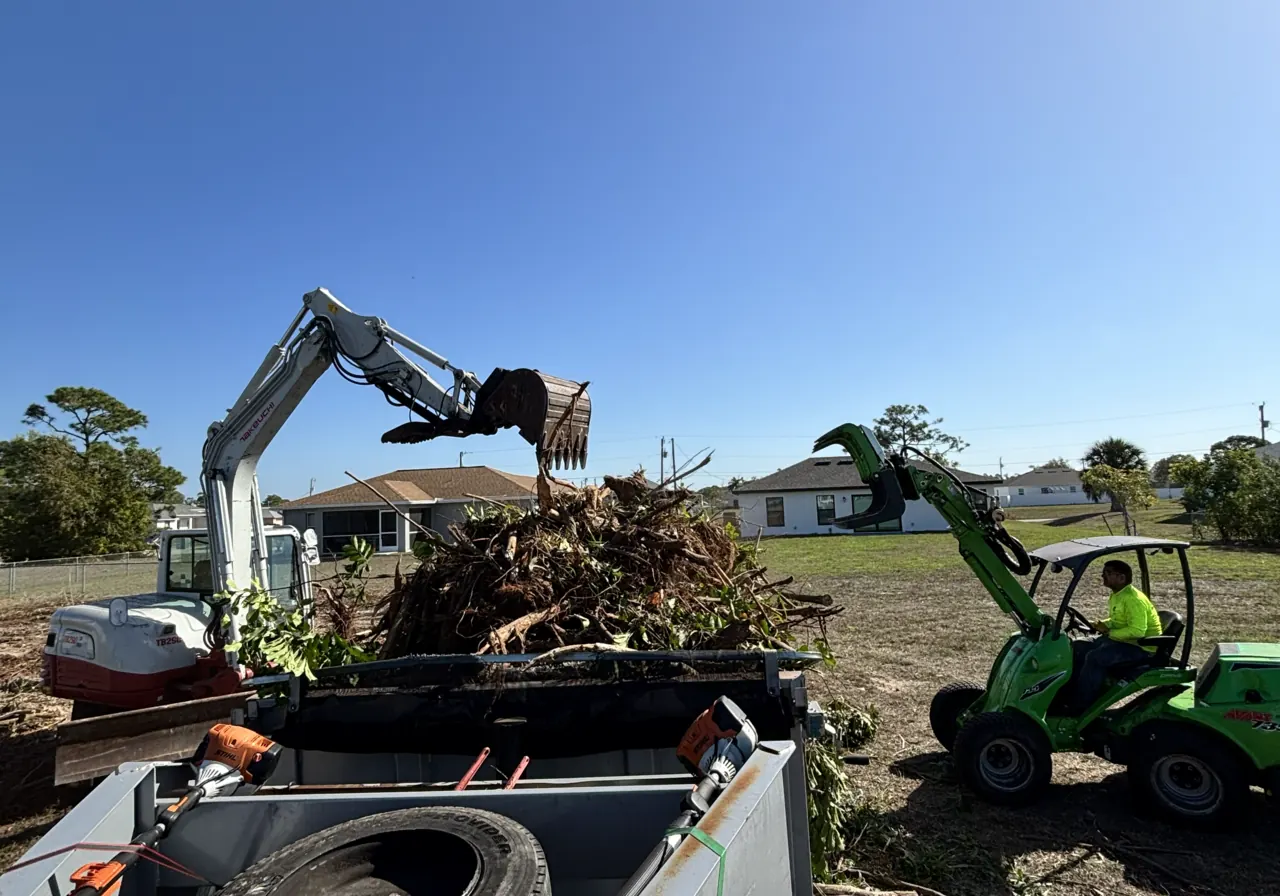
Land clearing reclaims a defined part of an overgrown property for a future use. That might be a barn, arena, orchard, pasture, fence line, building site, private road, or a broad area that needs to be walkable again. The work can include trees, brush, undergrowth, invasive species, stumps, roots, debris handling, and rough grading, depending on the handoff the owner needs.
On acreage, land clearing is phased so the crew can create access, process material, and keep the rest of the property protected while the work advances. Brazilian pepper, melaleuca, Australian pine, air potato vine, and Old World climbing fern each call for attention to regrowth and spread, not just a one-time cut. See our land clearing service for the standard clearing and site-preparation scope.
| Service | What it solves on acreage | Typical planning focus |
|---|---|---|
| Tree trimming and pruning | Manages the canopy you want to keep | Priority trees, structural work, clearance, storm exposure |
| Tree removal | Takes out individual hazardous or unwanted trees | Safe sequence, equipment access, structures, cleanup |
| Tree clearing | Opens selected areas while preserving chosen vegetation | What stays, travel lanes, view corridors, root zones |
| Land clearing | Reclaims ground for pasture, a site, or future use | Scope area, invasives, stumps, roots, debris, rough grade |
How Southwest Florida trees and invasive species affect acreage work
Large property work in Southwest Florida is shaped by mature live oak and laurel oak, cabbage palm, slash pine, wet ground, storm exposure, and invasive growth. The same parcel can contain valuable canopy near the house, brittle or declining trees along a drive, and fast-growing brush reclaiming the back acreage. Good planning separates those conditions instead of applying one clearing method everywhere.
Live oak is dense and long-lived, while laurel oak can decline sooner and become a hazard as it ages. Cabbage palms may be part of the desired landscape, while slash pine may be retained or removed depending on its condition and location. Australian pine can fail badly in wind, and Brazilian pepper can reclaim cleared ground quickly when root mass and regrowth are ignored. Melaleuca, air potato vine, and Old World climbing fern can also make a parcel harder to maintain.
Hurricane preparation starts with the whole property
A hurricane review on acreage looks beyond the main roof. It considers trees that can reach a guest house, barn, generator, well house, power drop, fence, pool area, or the private drive needed by every other contractor after a storm. Pre-season work can prioritize deadwood, weak limbs, trees with meaningful lean or damage, and access routes that should not be left blocked.
The work reduces avoidable tree risk, but it cannot prevent all hurricane damage. After a storm, the first practical priority may be opening a long driveway so the owner, roofer, adjuster, utility crew, or emergency responder can reach the property. Existing relationships also give the crew a better starting point because the layout and access plan are already known.
Invasive species need a plan for regrowth
Brazilian pepper, melaleuca, Australian pine, air potato vine, and Old World climbing fern can turn a cleared edge back into a wall if the work only cuts the visible growth. The site walk should identify where invasive stands are concentrated, what can be removed in the current block of days, and how the owner wants the area used afterward.
The practical response depends on the species and the parcel. Removal may include cutting, handling the root mass, chipping or hauling the material, and planning for follow-up growth. Owners should also confirm any parcel-specific requirements before work begins, especially near preserves, wetlands, or other protected areas.
Wet ground changes the equipment plan
Acreage that is easy to cross in dry weather can become soft, rutted, or temporarily inaccessible after heavy rain. Ground conditions affect where machines can travel, how debris can be staged, and how much protection is needed for turf and pasture. Scheduling and equipment choices should account for the site as it exists, not just the aerial view.
How large estate work is scheduled and quoted
- 1
Property walkthrough and priorities
We walk the property with the owner or designated contact and define what needs attention first. That conversation can cover structures, private drives, fences, gates, septic and irrigation areas, wells, pasture, livestock, trees to preserve, invasive stands, and the land's intended next use. The result is a scope that separates immediate work from future priorities.
- 2
Day-based scope and mobilization
Large properties are commonly quoted by the day and booked in two or three consecutive day blocks. The written scope accounts for the acreage being worked, tree size and species, proximity to structures, ground conditions, access, stump grinding, heavier machinery, and what happens to the debris. One mobilization keeps the schedule understandable and avoids four vendors arriving on four different days.
- 3
Sequenced work, documentation, and next steps
The crew opens access, protects the parts of the property that stay, completes the agreed trimming, removal, clearing, or land work, and handles the debris according to the plan. Photos and a written record can show what was completed and what should be watched next. Seasonal or absentee owners receive a clear handoff so the property does not depend on them being present every day.
Planning work across your property?
Start with the scope you know, or call to talk through the next step.
What drives the cost of tree and land work on acreage?
Large-property work is quoted after the site is understood, and multi-day pricing is based on the actual scope rather than a published day rate. Total acreage matters, but so does how much of the acreage is being worked. A few open acres with scattered trees can plan differently from one wooded acre surrounded by dense invasives, soft ground, and limited equipment access.
The free written quote should make the cost drivers visible. Owners can compare a focused first block of work with a broader property plan without guessing what is included or assuming that debris, stumps, or access preparation happen automatically.
Acreage, vegetation, and proximity to structures
The size and density of the trees, brush, and invasive growth affect how much can be completed in a day. Mature hardwoods near a house, barn, pool cage, or power drop need a different sequence from brush in an open back field. Species, condition, root mass, and the number of preservation decisions also affect the work plan.
Access, ground conditions, equipment, and debris
A narrow gate, paver or shell drive, fence, wet pasture, septic drainfield, irrigation line, or buried propane area can change where equipment stages and how material moves. The debris choice matters too. Chipping in place can create mulch for trails and beds, a back-corner pile may suit a large parcel, and full haul-off leaves less material behind but requires more handling.
| Planning factor | Owner decision | Why it matters |
|---|---|---|
| Work area | One priority zone or several acres | Sets the size and sequence of the day blocks |
| Tree scope | Trim, remove, selectively clear, or clear fully | Determines what remains and how equipment moves |
| Ground and access | Existing drive, gate, pasture, or a new route | Affects protection, staging, and feasible machinery |
| Debris | Mulch in place, consolidate, or haul off | Changes land use, handling, and cleanup |
How permits, preserves, and protected areas are handled
Requirements for acreage work vary by parcel and jurisdiction, so they should be confirmed before vegetation is touched. Large properties may involve preserve areas, conservation easements, wetland setbacks, protected species considerations, HOA guidelines, or other site-specific questions. Davie Tree Service identifies what needs checking and helps coordinate the process rather than guessing at a rule.
The owner should share surveys, site plans, easement information, and any direction already received from a local authority or project professional. That context helps the crew keep the agreed work area clear of places that need a separate review. Confirming requirements early protects the schedule and prevents a clearing plan from getting ahead of the parcel's approvals.
Utility, septic, well, and irrigation coordination
Buried utilities, septic drainfields, well heads, irrigation, and propane are easy to miss on overgrown land. The walkthrough should mark known locations and identify what needs a utility locate or owner confirmation before machines move. Access planning is part of the work, not an afterthought once equipment is already on the property.
How Davie protects a large property while working on it
A large estate requires property protection because heavy equipment and tree crews may be working near structures, fences, gates, pasture, livestock, irrigation, septic systems, wells, and long private drives. Davie Tree Service is licensed and insured, and the crew plans the route, work zones, staging areas, and equipment around the features the owner wants protected.
Seasonal and absentee owners also need confidence when they are not standing at the gate. A designated contact, access instructions, photos, and a written scope help keep the work accountable. The plan should note what is not to be disturbed, where debris can go, how gates are secured, and what condition the property should be in at the end of each work block.
- Match equipment and travel routes to ground conditions instead of assuming every part of the parcel can carry a machine.
- Protect paver and shell drives, turf, pasture, fencing, gates, irrigation, septic areas, wells, and structures through planned access.
- Use utility and owner-provided site information before disturbing areas that may contain buried services.
- Document completed work so an owner away for the season can review the result and plan the next priority.
What happens to brush, logs, stumps, and mulch?
Acreage debris can be chipped in place for trails and beds, consolidated in an approved back corner, or hauled away. The right choice depends on what the land is becoming. Mulch can be useful on paths and around selected areas, while haul-off may make more sense near a future building site, driveway, pasture, or property edge where the owner wants a clean handoff.
Stumps and root mass should be discussed separately because surface clearing is not the same as grubbing. If the next phase needs grade-ready ground, stump grinding or root removal may be included in the scope. The owner receives a plan for the material and a finish condition, rather than discovering a large pile or buried root mass after the crew leaves.
Related Tree Services
- Tree Trimming & Pruning covers the individual pruning decisions inside a whole-property canopy plan, including structural work, clearance, and deadwood removal for trees the owner wants to keep.
- Tree Removal handles individual hazardous or unwanted trees across the parcel, with the access and protection planning that larger removals require.
- Land Clearing & Lot Clearing takes the property from overgrown ground toward a defined use, including brush, invasives, stumps, roots, debris handling, and rough grading where included in the scope.
- Stump Grinding & Removal finishes stumps left by removal or clearing when the owner needs paths, pasture, planting areas, or future work zones to be free of trip hazards and surface obstacles.
- Storm Damage & Emergency Tree Service helps restore access after hurricanes and severe storms when fallen trees or broken limbs block a long private drive or threaten structures on the property.
Large Estate & Acreage Services FAQs
What size property do you consider a large estate?
Do you work by the day or by the tree on large properties?
How many days does it take to clear ten acres?
How far from Fort Myers will you travel for estate work?
Can you work on my property while I am out of state for the season?
What happens to all the brush and wood, and can I keep the mulch?
Will heavy equipment damage my lawn, driveway, or pasture?
What about my irrigation lines, septic drainfield, and well?
Do I need a permit to clear land on my property?
What is the difference between land clearing and selective tree clearing?
How do I know which trees are actually a hurricane risk?
How fast can you clear my driveway after a storm?
Can you handle trimming, removal, stump grinding, and clearing in the same visit?
What do you do about Brazilian pepper, melaleuca, and Australian pine?
Where we do large estate work
Fort Myers tree service area Owners near Fort Myers and Fort Myers Shores can start with the Fort Myers service area guide when they want local context before requesting a property walkthrough.
Cape Coral tree service area Cape Coral owners with larger lots can review the Cape Coral tree service page for local access and storm considerations, then ask about acreage scope.
Naples tree service area The Naples tree service guide is a useful starting point for owners in Naples, North Naples, and Golden Gate who need to coordinate large-property work.
Bonita Springs tree service area Bonita Springs property owners can compare the local service-area information before planning trimming, removal, or selective clearing across a larger parcel.
Estero tree service area Estero and Corkscrew owners can review the Estero tree service page and then describe the acreage, access, and structures involved in the walkthrough.
Lehigh Acres tree service area Lehigh Acres owners reclaiming overgrown land can use the local tree service guide as context for combining lot clearing with larger-property planning.
Proudly Serving Southwest Florida
Local, dependable tree service across Lee and Collier counties. Tap your city to learn more.
Davie Tree Service provides large estate and acreage work within about 40 miles of Fort Myers, Florida. Large properties are found in rural pockets and estate-oriented communities across Lee and Collier counties, and the actual service area should be confirmed for each address before scheduling. The scope can include multi-day work in Alva, Buckingham, Nalle Grade, North Fort Myers, Fort Myers Shores, Olga, Estero, Bonita Springs, Golden Gate Estates, Corkscrew, Naples, Lehigh Acres, and Cape Coral.
Request a Property Walkthrough
Share the basics first. Add acreage, access, and timing details only if they are helpful.
Request a Property Walkthrough
Tell us about the acreage, access, trees, land goals, and timing. We will help you define the right first block of work.